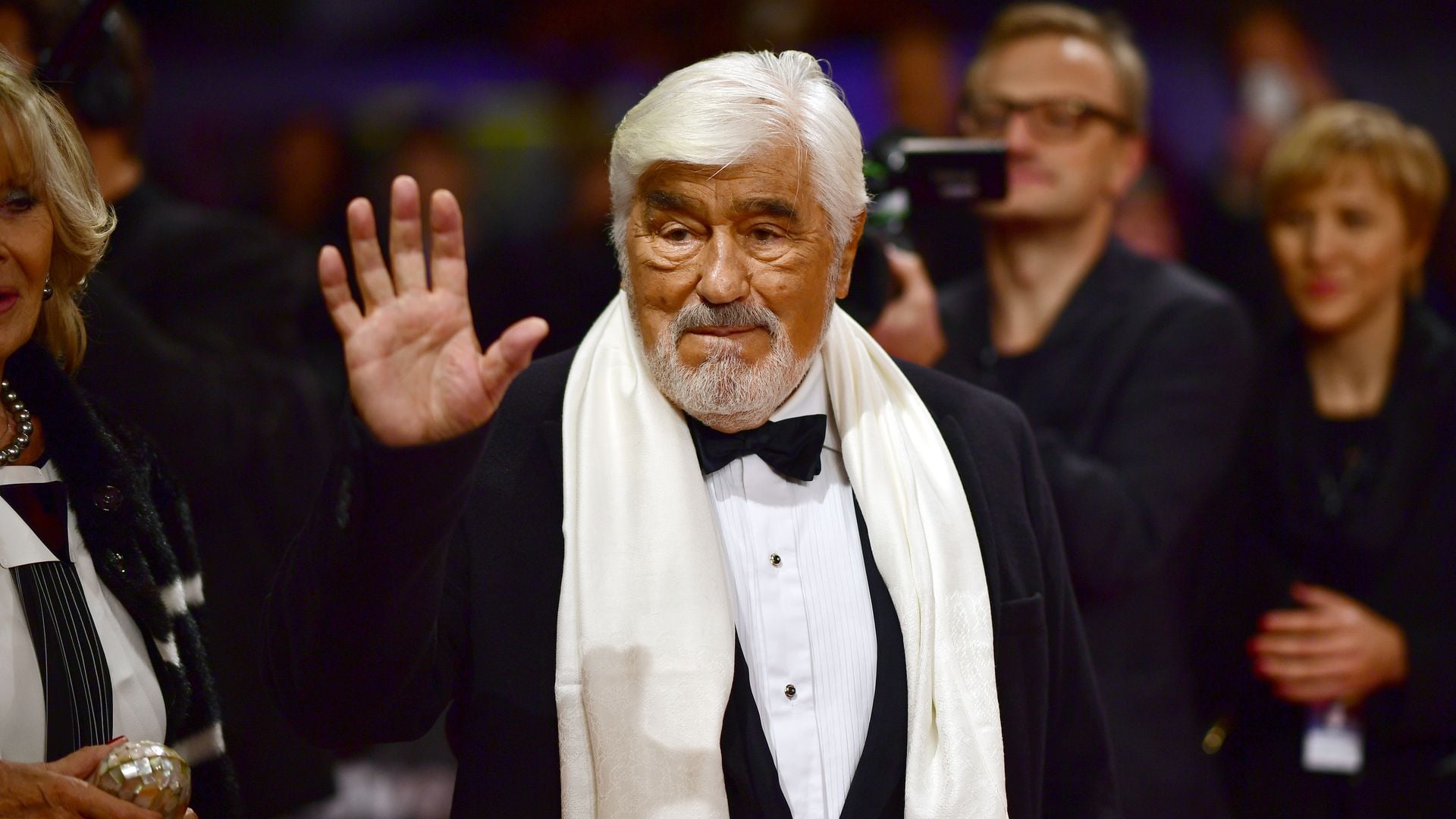
Unveiling Mario Adorf's Birthplace: A Swiss Beginning for a German Cinema Icon
When we reflect on the titans of German cinema, Mario Adorf undeniably stands out. With a career spanning over seven decades and more than 200 roles, his distinctive voice, powerful screen presence, and unparalleled versatility left an indelible mark on film, television, and theatre across Europe. But for many, a lingering question often arises:
Wo Wurde Mario Adorf Geboren? The answer, perhaps surprisingly to some, takes us outside of Germany's borders, revealing his unique Swiss origins.
Mario Adorf was born on 8. September 1930, not in Germany, but in the vibrant city of Zürich, Switzerland. This detail is crucial to understanding the multifaceted personality and diverse career of an actor who effortlessly transcended national cinematic boundaries. Born as the illegitimate child of a German X-ray assistant and an Italian surgeon, Adorf's very beginnings were a blend of cultures, hinting at the international breadth his future career would encompass. His birth in Zürich laid the foundation for a life rich in experiences, a journey that would ultimately lead him to become one of the most significant German-speaking actors of the post-war era.
Formative Years: From Zürich's Cradle to the Eifel's Embrace
While Mario Adorf's birth certificate undeniably pointed to Zürich as his initial home, his formative years were predominantly spent elsewhere. Soon after his birth in Switzerland, his German mother brought him to the picturesque Eifel region in Germany. It was here, surrounded by the natural beauty and rugged landscapes of the Eifel, that Adorf grew up, far removed from the urban sophistication of his birthplace. This early upbringing with his mother deeply shaped his character, instilling in him a grounded practicality mixed with a burgeoning artistic spirit.
His mother, a no-nonsense woman, famously presented him with a clear ultimatum: excel in school, or face a future as a butcher. Thankfully for cinema enthusiasts worldwide, young Mario chose a different path. He diligently pursued his education, yet his true calling soon became apparent. This fascinating juxtaposition of his Swiss birth and German upbringing in the Eifel provided him with a unique cultural lens, allowing him to portray a vast array of characters with authentic depth. It’s a story that truly underscores the complex tapestry of his early life, as explored further in
Mario Adorf's Birthplace: Zürich, Eifel, and His Early Life Story. His journey from these diverse roots to becoming a cinematic legend is a testament to his resilience and talent. You can delve deeper into how his heritage influenced his trajectory in
From Zürich to German Cinema Legend: Mario Adorf's Birth & Roots.
The Path to Stardom: Munich, Breakthroughs, and Breaking Typecasts
Mario Adorf's acting journey officially began with rigorous training at the renowned Otto-Falckenberg-Schule in Munich. It was during these foundational years that he honed the skills that would define his legendary career. His talent quickly became undeniable, leading to his artistic breakthrough in 1957 with Robert Siodmak's compelling film, "Nachts, wenn der Teufel kam" (The Devil Came at Night). In this powerful drama, Adorf delivered a stunning performance as Bruno Lüdke, a man wrongly accused of being a serial killer under the Nazi regime, showcasing his profound dramatic range and intense presence.
This early success, while launching his career, also presented a challenge: he was frequently typecast as the villain. His distinctive deep voice, commanding stature, and characterful face made him a perfect fit for antagonists. One of his most memorable—and for many viewers, unforgivable—roles was that of the ruthless Frederick Santer in the iconic 1964 Western "Winnetou I," where he notoriously shot Winnetou's beloved sister, Nscho-tschi. This act earned him the ire of countless fans, who for years struggled to separate the actor from the despicable character.
However, Adorf was far more than just a villain. His genius lay in his ability to infuse even the most brutal or morally ambiguous characters with a nuanced humanity. He mastered the art of making villains understandable, if not sympathetic, and heroes compellingly complex, without ever sanitizing their darker aspects. This capacity to embody ambiguity made him a standout performer, capable of portraying everything from hardened criminals to endearing comedians with equal conviction.
A Dazzling Career: International Acclaim and Iconic Roles
Mario Adorf's career was a vibrant tapestry woven with diverse roles across national and international productions. He worked with some of the most respected directors of his time, demonstrating an extraordinary adaptability that few actors possess. His collaborations with visionaries like Volker Schlöndorff resulted in unforgettable performances, most notably as the brutal patriarch Alfred Matzerath in the Oscar-winning 1979 adaptation of Günter Grass's "Die Blechtrommel" (The Tin Drum). His portrayal was both terrifying and captivating, cementing his status as an actor of immense gravitas.
He also famously worked with Rainer Werner Fassbinder in "Lola," further showcasing his ability to inhabit complex characters within challenging cinematic landscapes. Adorf's talent was not confined to German-speaking cinema; he ventured into Italian mafia films, French dramas, and international thrillers, making him a truly European star. This international exposure allowed him to refine his craft, absorbing influences and expanding his stylistic range.
Beyond the silver screen, Adorf achieved massive popularity in German television, particularly through his collaborations with producer and director Dieter Wedel. He took on leading roles in Wedel's critically acclaimed multi-part series, including "Der Große Bellheim" (1992), "Der Schattenmann" (1995), and "Die Affäre Semmeling" (2002). These productions made him a household name for a broader audience, revealing his mastery as a multi-layered character actor.
His extensive body of work, totaling over 200 film and television productions, also extended to other artistic endeavors. Adorf lent his distinctive voice to audiobooks and synchronized films, and he delved into literature, penning several autobiographical books and novels that offered intimate reflections on his life both in front of and behind the cameras. His life was a testament to his unending curiosity and commitment to artistic expression.
The Enduring Legacy of a European Cinema Giant
Mario Adorf’s passing on 8. April 2026, in Paris at the age of 95, marked the end of an era for German and European cinema. His absence leaves a void that will be keenly felt by colleagues, critics, and generations of fans. He was more than just an actor; he was a cultural phenomenon whose work resonated deeply with audiences because he dared to explore the full spectrum of human nature.
His unique blend of charm, inherent toughness, and a keen observational intellect allowed him to fill every role with a nuanced humanity. Whether he was portraying a heroic figure or a despicable villain, Adorf brought a compelling authenticity that made his characters unforgettable. He taught us that even the most villainous characters could possess layers of complexity, and that human nature is rarely as black and white as it appears. His powerful presence and deep, resonant voice became his trademarks, instantly recognizable and deeply impactful.
Adorf’s dedication to his craft, his willingness to take on challenging roles, and his enduring versatility ensured his place in the pantheon of great actors. He remained active and engaged throughout his long life, constantly seeking new ways to express his artistry. His legacy is not just in the countless films and performances he left behind, but also in the inspiration he provided to aspiring actors and the profound emotional connection he forged with his audience.
Conclusion
From his unexpected birth in Zürich, Switzerland, to his upbringing in the German Eifel, Mario Adorf embarked on a remarkable journey that culminated in an iconic career spanning over seven decades. The question,
Wo Wurde Mario Adorf Geboren? leads us to a fascinating beginning, but it is his extraordinary talent, unparalleled versatility, and unwavering dedication to his craft that truly define his legacy. He was an actor who transcended borders, typecasts, and generations, leaving behind a rich tapestry of performances that continue to captivate and inspire. Mario Adorf was, and will forever remain, a true giant of European cinema.