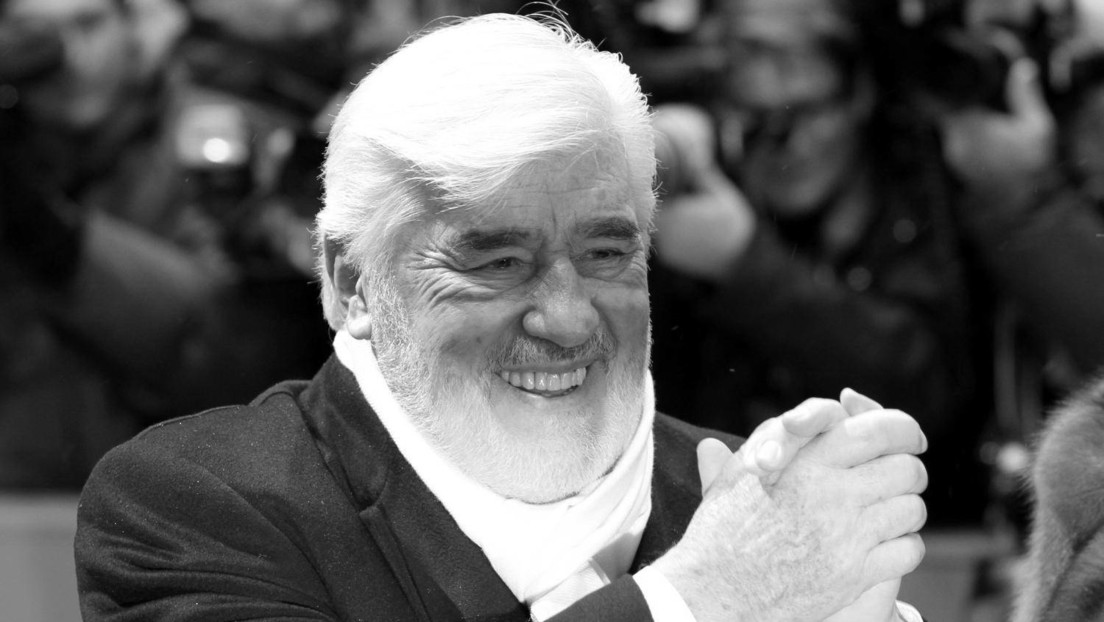
From Zürich to German Cinema Legend: Unveiling Mario Adorf's Birth & Roots
The name Mario Adorf conjures images of a charismatic, intense, and deeply versatile actor whose presence dominated German and European cinema for over seven decades. From hardened villains to complex heroes, Adorf embodied a spectrum of human experience with unparalleled authenticity. But before the international acclaim, the iconic roles, and the enduring legacy, there was a specific beginning that shaped the man and the artist. Many fans and cinephiles often ponder: Wo wurde Mario Adorf geboren? The answer reveals a fascinating blend of Swiss precision, Italian passion, and German grounding that set the stage for a truly exceptional life.
The Swiss Beginning: Zürich, 1930 – A Pivotal Birth
Mario Adorf's journey into the world began not in the cinematic heartlands of Berlin or Rome, but in the picturesque city of Zürich, Switzerland. It was on September 8, 1930, that the future acting giant drew his first breath. This Swiss birthplace is a crucial detail, painting the initial strokes of his unique heritage. He was born the illegitimate child of a German radiologist, Anna Bettoni, and an Italian surgeon, Matteo Adorf. This cross-cultural parentage, combined with the circumstances of his birth, undoubtedly laid a complex foundation for his early identity.
Being born an "illegitimate child" in the early 20th century carried a certain social stigma, a reality that often fostered resilience and a unique perspective on life. While Zürich provided the initial setting, the story of Mario Adorf's early roots quickly moved across borders, further diversifying the influences that would forge his distinctive character. This early experience of being an "outsider" or someone navigating complex personal circumstances might have subtly contributed to his later ability to portray characters with profound inner lives and often ambiguous moral compasses. The precision often associated with Swiss culture, perhaps intertwined with the artistic temperament of his Italian heritage, offered a rich tapestry from which his personality would later emerge.
From Swiss Birth to Eifel Upbringing: Shaping a Legend
While his birth certificate might read Zürich, Mario Adorf's formative years were spent predominantly in the tranquil, often rugged, landscape of the Eifel region in Germany. It was here, living with his mother, that he experienced childhood and adolescence, far from the bustling film sets that would later become his second home. This upbringing provided a stark contrast to his birthplace, grounding him in the German countryside and instilling a sense of practicality and perhaps even a hint of rustic charm that would later become part of his on-screen persona.
A memorable anecdote from his mother highlights the down-to-earth expectations placed upon him: "If you're good in school, everything's okay, and if not, you'll become a butcher." Thankfully for the world of cinema, Mario chose a different path. This statement, however, underscores the pragmatic environment in which he was raised, an environment that likely fostered a strong work ethic and an understanding of tangible realities. The blend of his Swiss birth and German upbringing in the Eifel provided a rich dual heritage. It's a testament to his character that he transcended these humble beginnings, not by forgetting them, but by integrating them into the fabric of his multifaceted identity. To dive deeper into these formative years, you can explore Mario Adorf's Birthplace: Zürich, Eifel, and His Early Life Story, which details how these early experiences profoundly influenced the man he became.
The Path to Stardom: Munich and Early Breakthroughs
Defying the "butcher" prophecy, Adorf pursued higher education, initially studying philosophy, literature, and dramaturgy. His true calling, however, lay in acting, leading him to the esteemed Otto-Falckenberg-Schule in Munich for his formal training. This period marked his definitive step towards a career in performance, honing the raw talent that had simmered within him.
His artistic breakthrough arrived swiftly in 1957 with Robert Siodmak's chilling film "Nachts, wenn der Teufel kam" (Nights When the Devil Came). In this pivotal role, Adorf portrayed Bruno Lüdke, a man falsely accused of being a serial killer under the Nazi dictatorship, showcasing his dramatic intensity and ability to inhabit complex, often tormented characters. This role immediately established his reputation, albeit initially typecasting him as the "schurk" or villain. His deep voice, piercing gaze, and powerful presence made him incredibly convincing in menacing roles.
One of his most memorable early villainous portrayals, and one that famously earned him the ire of an entire generation, was Frederick Santer in "Winnetou I." As the ruthless adversary who tragically murders Winnetou's sister Nscho-tschi, Adorf cemented his image as a compelling antagonist. Many fans, particularly children, found it difficult to forgive him for this cinematic act, a testament to the power of his performance and his ability to make fictional characters feel intensely real.
Beyond the Villain: Versatility and International Acclaim
While his early career was marked by compelling villainous turns, Mario Adorf was far too talented to be confined to a single archetype. He possessed an innate ability to infuse even the darkest characters with a nuanced humanity, making them understandable, if not always sympathetic. This versatility became his hallmark.
He swiftly transcended the "bad guy" image, demonstrating his range in countless national and international productions. His career spanned more than 200 roles in film, television, and theatre, collaborating with renowned directors across Europe. He ventured into Italian Mafia films, French dramas, and international thrillers, establishing himself as a truly pan-European star. His unique blend of charm, toughness, and keen observational skills allowed him to fill every role with a sophisticated, human complexity.
Among his most iconic roles is the brutal yet strangely compelling father, Alfred Matzerath, in Volker Schlöndorff's 1979 Oscar-winning adaptation of Günter Grass's "Die Blechtrommel" (The Tin Drum). This performance solidified his status as a character actor of immense depth. He worked with cinematic titans like Rainer Werner Fassbinder in "Lola," consistently proving his capacity to embody ambivalent personalities with profound inner lives. His gift lay in making even the most villainous figures seem human and, conversely, lending an intriguing ambiguity to heroes.
In later years, Adorf became a household name through his collaborations with producer and director Dieter Wedel, starring in popular German TV miniseries such as "Der Große Bellheim" (1992), "Der Schattenmann" (1995), and "Die Affäre Semmeling" (2002). These roles introduced him to a broader audience as a master of multi-layered character portrayal. His ability to switch effortlessly between German, Italian, and French productions highlighted not only his linguistic prowess but also his universal appeal as a performer. For those keen to understand the full scope of his remarkable trajectory from his early days, the article Where Was Mario Adorf Born? Uncovering His Swiss Origins offers further insights into the roots of his global success.
A Legacy Endures: More Than Just an Actor
Mario Adorf's contributions extended beyond acting. He was also an accomplished author, publishing several autobiographical books and novels that offered unique insights into the world behind the scenes, reflecting on his life and career with candor and wit. His distinctive voice also graced numerous audiobooks and synchronised dubbings, adding another dimension to his artistic output. He was, in essence, a storyteller in multiple forms.
Adorf's final curtain call came on April 8, 2026, when he passed away peacefully in his Paris apartment at the age of 95, following a brief but severe illness. He left behind his wife Monique, a daughter, and a grandson, along with an indelible mark on the German and European film world. His passing marked the end of an era, but his legacy as one of the most significant German actors of the post-war period remains vibrant and inspiring.
His unique upbringing—born in sophisticated Zürich to a German mother and Italian father, raised in the pragmatic Eifel—seems to have perfectly prepared him for a career requiring immense adaptability and a deep understanding of diverse human experiences. He was a bridge between cultures, embodying the nuanced complexities of European identity. Mario Adorf taught us that true artistry lies not just in talent, but in the willingness to explore every facet of the human condition, making even villains relatable and heroes strikingly flawed.
Conclusion
The question, Wo wurde Mario Adorf geboren?, opens the door to understanding the foundational elements of a truly legendary figure. His birth in Zürich in 1930, to a German mother and Italian father, followed by his formative years in the German Eifel, created a unique individual poised for greatness. This distinctive blend of Swiss beginnings, German roots, and Italian heritage undoubtedly contributed to his remarkable versatility and profound ability to embody a vast array of characters. Mario Adorf was more than an actor; he was a cultural phenomenon, a bridge between nations, and a master storyteller whose captivating presence, whether as a hero or a villain, will continue to inspire and resonate through the annals of cinema history for generations to come. His life journey from a modest birth to a global stage is a testament to talent, resilience, and an unwavering dedication to his craft.